Top Ad 728x90

mardi 3 novembre 2026

Cooked this salmon and weird white stuff exploded out of it. Are these worms?

by


Cooking salmon is a delightful experience for many home chefs and seafood lovers. The rich flavor and tender texture of this fish make it a staple in many kitchens. However, a common occurrence that can be quite concerning is the appearance of a white substance oozing out of the salmon during cooking. This sight often leads to questions and concerns about the safety and quality of the fish.

For those who are unfamiliar, seeing this white substance can be alarming, leading to fears about worms or parasites being in their meal. Understanding what this white stuff is, why it appears, and how to deal with it is essential for anyone who cooks salmon regularly. In this article, we’ll delve into the nature of this phenomenon, how to distinguish it from potential issues, and tips to ensure your salmon remains a delicious and worry-free dish.
1. What Is That Weird White Stuff Oozing Out Of Cooked Salmon?
The white substance that often appears on cooked salmon is known as albumin. Albumin is a protein found in the muscle fibers of fish that coagulates and surfaces on the fish as it cooks. It is completely natural and occurs when the salmon is subjected to heat.
When salmon is heated, the muscle fibers contract, pushing the albumin to the surface. This process is more noticeable when salmon is cooked at a high temperature or for an extended period. While it may not be visually appealing, it is harmless and does not indicate a problem with the fish.
2. Albumin 101: The Totally Normal Protein Behind The White Gunk
Albumin is a water-soluble protein found in various animals, including humans. In salmon, it plays a crucial role in maintaining the fish’s muscle structure and moisture content. When the fish is raw, albumin is dispersed throughout the muscle fibers, but it becomes visible as a white film when denatured by heat.
Typically, the amount of albumin is quite small, but cooking methods involving higher temperatures can cause more albumin to seep out. This is why steaming or poaching salmon might result in less visible albumin compared to grilling or baking at high temperatures.
3. How To Tell Albumin From Actual Worms Or Parasites
Distinguishing albumin from worms or parasites is relatively straightforward. Albumin appears as a white, gelatinous substance on the surface of the cooked salmon, often forming a thin layer or small blobs. It is smooth and consistent in texture.
Worms or parasites, on the other hand, are usually more thread-like or segmented and may have a distinct shape or movement if they are still alive. If you ever encounter something that resembles a worm in your salmon, it is advisable to inspect it closely and consult a seafood expert if you’re unsure.
4. When White Stuff Is A Red Flag: Signs Your Salmon Isn’t Safe
While albumin itself is not a cause for concern, there are other signs that indicate your salmon might not be safe to eat. Check for an off-putting smell, a slimy texture, or discoloration, which are indicators of spoilage.

Keep reading — tap the button below to continue.

If the salmon has a strong, fishy odor or appears dull and grey instead of vibrant and pink, it may be past its prime. Additionally, ensure that the fish is stored properly at temperatures below 40°F to prevent bacterial growth.
5. Why Some Salmon Leak More Albumin Than Others
The amount of albumin that leaks from salmon can vary based on several factors, including the type of salmon, its freshness, and the method of cooking. Wild salmon, which has less fat compared to farmed salmon, often releases more albumin as the protein content is higher relative to fat.
Freshness also plays a role; fresher salmon tends to have firmer muscle fibers that hold albumin more effectively until cooking. Cooking techniques that involve lower temperatures can also reduce the amount of albumin released.
6. Common Cooking Mistakes That Make Albumin Explode Out
One of the most common mistakes that lead to excessive albumin release is cooking the salmon at too high a temperature or for too long. High heat causes the muscle fibers to contract excessively, squeezing out more albumin.
Overcooking is another culprit. Salmon should ideally be cooked until it reaches an internal temperature of 125°F (52°C) for medium-rare. Going beyond this can result in more albumin surfacing, along with a dry texture.
7. Simple Cooking Hacks To Keep Your Salmon Smooth And Pretty
To minimize the appearance of albumin, consider cooking methods that use gentler heat, such as poaching or slow-roasting. These methods help maintain the integrity of the protein and limit albumin release.
Brining the salmon briefly in a solution of water and salt before cooking can also help. This process helps to firm up the fish’s surface, reducing albumin leakage. Aim for a brine time of about 10 minutes before patting the fish dry and proceeding with cooking.
8. Is It Safe To Eat? What Food Scientists And Chefs Say
According to food scientists and culinary experts, the presence of albumin on cooked salmon is entirely safe and does not affect the edibility of the fish. It is a natural occurrence and does not indicate spoilage or contamination.
Chefs often recommend simply wiping off the albumin if its appearance is bothersome, as it does not alter the taste or quality of the salmon. The key is to ensure the fish is fresh and cooked to the proper internal temperature.
9. How To Buy Salmon That’s Less Likely To Ooze White Gunk
When purchasing salmon, opt for fresh, high-quality cuts from reputable sources. Look for salmon with vibrant color, firm flesh, and a sea-like smell. Higher-quality salmon, such as those that are fresher or from specific species like King or Sockeye, may leak less albumin.
Ask your fishmonger about the harvest date and storage conditions to ensure you are getting the freshest possible product. Proper handling from the moment of purchase to cooking is crucial in maintaining the quality of the salmon.
10. What To Do If You Really Did Find Worms In Your Fish
If you find what appears to be worms in your salmon, it is important to take immediate action. Do not consume the fish and contact the retailer or supplier to report the issue. Most suppliers will be willing to refund or replace the product.
Worms in fish are not common in commercially sold seafood, as most suppliers follow strict guidelines for freezing and inspecting fish to eliminate parasites. However, it is always wise to inspect your fish before cooking and eating.
11. The Bottom Line On Salmon, White Stuff, And Food Safety Panic
The appearance of white albumin on cooked salmon is a normal and harmless occurrence, often misunderstood by consumers. It signals nothing more than a reaction of the fish’s natural proteins to heat.
Ensuring your salmon is fresh, properly stored, and cooked with care can help minimize albumin and maintain the dish’s aesthetic appeal. Remember, the key to enjoying salmon is understanding what is normal and what is not, so you can savor this nutritious and delicious fish without worry.

Keep reading — tap the button below to continue.


The most dangerous sleeping position you didn’t know about

by


 We often hear about the ideal number of hours of sleep. But less often about how we sleep. Yet the position you adopt each night can significantly affect your well-being. Some positions promote good sleep and good blood circulation, while others can interfere with posture, breathing or even digestion in the long term.

And you, do you sleep “on your right side”?

Sleeping on your stomach: a habit you should avoid.

If you’re used to sleeping on your stomach, it might be time to reconsider this position. While it may seem comfortable at first glance, it’s not recommended by many sleep specialists.

Why? Because it:

Causes the head to turn sideways for hours,
leading to neck strain. Straightens the spine, which
can lead to back pain. Compresses the lungs and limits the quality of
breathing at night. Puts pressure on the face,
which promotes the appearance of fine lines. Can reduce blood circulation and cause tingling or numbness.

If you wake up stiff, tense, or tired despite having a good mattress… your sleeping position could well be the culprit.

The best positions for a restful sleep

Fortunately, some positions are much more respectful of your body. Here are three you should focus on:

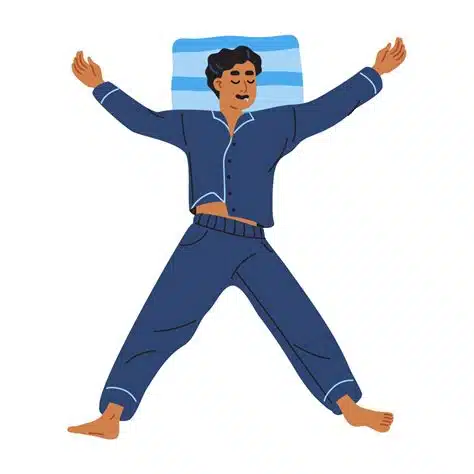
On your back – “Starfish position”: for extensive recovery

Lying on your back with relaxed arms and legs, this position:

Respects the natural position of the spine.
Promotes muscle relaxation.
Enables fuller
breathing. Relieves the internal organs.


It is one of the most recommended positions for optimal physical recovery, especially by osteopaths and physiotherapists.

More on the next page  

Keep reading — tap the button below to continue.On the left side – the ally of digestion

There are several benefits to sleeping on your left side:

Improves digestion and reduces acid
reflux. Promotes better venous return to the heart.
Often recommended during pregnancy.
Provides better comfort for people prone to indigestion.


This is the ideal position if you have an upset stomach or restless sleep.

On the right side – Common, but use sparingly

This position is very common and generally comfortable, but:

May slightly worsen gastroesophageal
reflux disease. Less effective for lymphatic drainage.


It is still appropriate if you feel comfortable this way, provided you have good support for your lower back and neck.

And you, what does the way you sleep reveal?

According to some behavioral research:

Keep reading — tap the button below to continue.

Left: calm profiles, 45 to 54 years old. Right
: active people, often coffee enthusiasts.
On the stomach: stressed or anxious
personalities. On the back (starfish): independent temperaments, more likely to get up early.

It’s fun to watch… but also useful for getting to know yourself better.

Tips for better sleep…with good posture

Changing positions isn’t always easy. Here are some tips to help you gradually get used to it:

Use an ergonomic pillow to
relieve strain on your neck. Choose a balanced mattress (not too soft, not too firm).
If you sleep on your side, place a pillow between your knees to
keep your pelvis aligned. To get out of a stomach position, push a pillow or body pillow in front of you.

With a little perseverance, changing your attitude can change the quality of your nights…and your days. 


Keep reading — tap the button below to continue.

How Your Sleep Position Reveals If You’re Lazy

by


 You’ve probably seen those viral claims: “If you sleep like this, you’re lazy.” It sounds intriguing—and maybe a little alarming. But is there any truth behind it?According to research in psychology and sleep science, your sleep position can reflect certain comfort preferences, physical needs, or subtle personality tendencies—but labeling someone as “lazy” based on how they sleep is a significant oversimplification.Let’s break down what your sleep position really says—and what it definitely doesn’t—with clarity, compassion, and evidence-based insight.Cultural ContextThroughout history, sleep has been both a biological necessity and a cultural mirror. In some traditions, sleeping posture was tied to spiritual beliefs or health philosophies—from Ayurvedic recommendations to medieval European humoral theory. Today, social media has revived fascination with sleep positions, often packaging complex human behavior into catchy, shareable myths. While these viral claims can spark curiosity, they frequently blur the line between playful observation and pseudoscience. This article honors that curiosity while grounding the conversation in research: not to debunk your habits, but to help you understand them with nuance and self-compassion.Why This MattersReduces self-judgment: Understanding the real factors behind sleep posture helps replace shame with self-awareness.Promotes better sleep hygiene: Knowing what influences your position can guide healthier choices for rest and recovery.Counters harmful stereotypes: “Laziness” is rarely about posture—it’s often about energy, mental health, or unmet needs.Encourages body literacy: Listening to how your body naturally settles can reveal clues about comfort, stress, or physical health.Supports compassionate curiosity: Asking “why?” about your habits opens the door to gentle, sustainable change—if you choose it.First Things First: Sleep Position ≠ Laziness

Don’t miss the rest! Click Next Below To Continue Reading.

Keep reading — tap the button below to continue.

First Things First: Sleep Position ≠ Laziness
Laziness isn’t something that can be diagnosed by how you sleep. In fact, sleep position is influenced by a constellation of factors:

Physical comfort and body structure

Habit, routine, and learned behaviors

Health conditions (like back pain, sleep apnea, or pregnancy)

Stress levels, emotional state, and sleep environment

While your sleep style might offer small clues about preferences or tendencies, it doesn’t define your motivation, work ethic, creativity, or energy levels. Sleep is a state of restoration—not a personality audit.

Common Sleep Positions & What Research Suggests They May Reflect
1. The Fetal Position (Curled Up on Your Side)
One of the most common sleeping postures worldwide.

What it may suggest:

A preference for comfort, security, or emotional grounding

Sensitivity or heightened awareness of surroundings

A natural response to stress or the need for self-soothing

The myth: Some claim this “passive” posture signals laziness.

The reality: It’s simply a cozy, protective position many bodies find naturally relaxing—especially after long days.

2. The Log Position (Straight on Your Side, Arms Down)
Sleeping on your side with arms resting alongside your body.

Keep reading — tap the button below to continue.

Possible associations:

An easygoing, adaptable temperament

A trusting, socially open nature

A preference for simplicity and low-stimulation environments

Note: This position is often linked with restful, uninterrupted sleep—not inactivity.

3. The Hugger (Side-Sleeping with Arms Forward)
Like reaching out or embracing a pillow.

What it may reflect:

Discover more
Cookies
Skillet
Hamburger
An open-minded, thoughtful disposition

A tendency to process emotions or decisions carefully

A desire for connection or tactile comfort

Clarification: Nothing here points to laziness—just a reflection of how you seek ease.

4. The Soldier (Flat on Your Back, Arms at Sides)
A structured, symmetrical sleeping posture.

Possible traits:

A preference for order, routine, or quiet environments

A reserved or self-contained approach to challenges

Physical comfort with spinal alignment (when supported properly)

Context: This position is often chosen for practical reasons—like reducing neck strain—not as a statement about ambition.

5. The Starfish (On Your Back, Arms Spread Out)
A relaxed, open posture that takes up space.

What it may suggest:

Discover more
Muffins
cookie
Eggs
A supportive, generous interpersonal style

Comfort in your environment and with vulnerability

A tendency to prioritize ease and emotional openness

Reality check: Far from lazy, this position often reflects confidence and physical ease.

6. The Freefall (On Your Stomach, Arms Around Pillow)
Face down with arms tucked or wrapped.

Possible associations:

A bold, outgoing, or action-oriented temperament

Sensitivity to criticism or a desire for control

A preference for deep pressure or tactile grounding

Important note: While this position can strain the neck or spine for some, it often reflects an energetic—not passive—personality.

You Must Know: Where the “Lazy” Myth Really Comes From
The idea that certain sleep positions signal laziness likely stems from visual assumptions: some postures look more relaxed or passive than others. But in reality:

Discover more
eggs
Beverages
Burgers
Sleep is a recovery state, not a personality test. Everyone looks “inactive” while sleeping—that’s the entire point of rest.

Behavior while awake is a far better indicator of motivation than posture while unconscious.

Psychology doesn’t define laziness by posture. It’s influenced by habits, mindset, environment, mental health, energy levels, and even undiagnosed conditions like ADHD, depression, or chronic fatigue.

Correlation isn’t causation. Even if a study finds a slight statistical link between a position and a trait, it doesn’t mean one causes the other—or applies to you as an individual.

Serving Suggestions: What Your Sleep Position Can Reveal (And How to Use That Insight)

While sleep position doesn’t indicate laziness, it can offer gentle clues about:

Comfort preferences: Do you crave pressure, openness, or containment? This can guide pillow, mattress, or blanket choices.

Physical health signals: Chronic pain, breathing issues, or restlessness may influence your natural posture. Noticing patterns can prompt helpful conversations with a healthcare provider.

Stress or emotional state: Tensing up, curling tightly, or shifting frequently may reflect anxiety or overstimulation.

Sleep quality: Certain positions support better breathing, spinal alignment, or temperature regulation. Experimenting mindfully can improve rest.

Practical tips:

Keep a simple sleep log for a week: note your position, comfort level, and morning energy. Look for patterns without judgment.

Adjust your environment: supportive pillows, breathable bedding, or a cooler room can help your body settle more easily.

If you wake with pain or fatigue, consult a physical therapist or sleep specialist—your posture may be a clue, not a character flaw.

Frequently Asked Questions
Q: Can sleep position reflect personality at all?

Keep reading — tap the button below to continue.

A: To a very small, non-definitive extent, yes—but it’s not a reliable or scientifically validated personality assessment. Human behavior is too complex for posture-based labeling.

Q: Is there a “best” sleep position?

A: It depends on your body. Side sleeping is often recommended for reducing snoring and supporting spinal alignment. Back sleeping can help with neck pain (with proper pillow support). Stomach sleeping is generally least recommended due to potential strain. Comfort and restorative rest matter most.

Q: Why do people believe these myths?

A: Simple, catchy explanations are appealing—they offer quick answers in a complex world. But human behavior, sleep, and personality are deeply nuanced. Curiosity is great; oversimplification less so.

Q: Can changing my sleep position improve my sleep?

A: Yes! If you experience snoring, back pain, or restless sleep, experimenting with position, pillow support, or mattress firmness can make a meaningful difference. Start small and listen to your body.

Q: What if I shift positions all night?

A: That’s completely normal! Most people change positions 10–30 times per night. Your “primary” position is just the one you return to most often—not a rigid identity.

Important Considerations: Health, Safety & Self-Compassion
This article is for informational and reflective purposes only and is not a substitute for professional medical, psychological, or sleep-health guidance.

Sleep is highly individual: Anatomy, health conditions, medications, life stage, and environment all influence sleep posture. What works for one person may not work for another.

Avoid self-diagnosis: If you experience chronic fatigue, unrefreshing sleep, pain, or emotional distress, consult a healthcare provider. These symptoms deserve compassionate, personalized care—not viral labels.

Laziness is rarely about posture: Low energy, procrastination, or lack of motivation often stem from stress, burnout, mental health challenges, or unmet needs—not character flaws. Respond with curiosity, not criticism.

Prioritize rest without shame: Your body knows how to rest. Trusting that process is a form of self-respect.

Your sleep position says far more about how you rest than who you are as a person. It’s shaped by comfort, habit, physical needs, and the quiet wisdom of your body seeking restoration—not your ambition, work ethic, or worth.

So if you love curling up in a cozy ball, stretching out like a starfish, or shifting freely through the night, go for it. Your body isn’t performing laziness—it’s practicing recovery. And in a world that often glorifies busyness, that’s not a flaw. It’s a form of intelligence.

If this article brought you clarity or calm, I’d love to hear from you. What’s your go-to sleep position? Has understanding the “why” changed how you feel about it? Drop a comment below. And if you know someone who’s ever worried their sleep style says something negative about them, please share this with them.

Sometimes the greatest gift we can offer is the quiet reminder:

However you rest, you are enough. However you recharge, you belong.

Don’t miss the rest! Click Next Below To Continue Reading.

Keep reading — tap the button below to continue.


Hurricane set to hit the US has become ‘unsurvivable’ as experts wa:rn of catastrophic impact ⏬

by


BREAKING NEWS: The National Hurricane Center (NHC) has begun posting advisories on Potential Tropical Cyclone Nine, which will likely become Tropical Storm Helene later today or tonight.

Big Picture: Tropical Storm Helene will likely form in the NW Caribbean later today or tonight, then strengthen to a hurricane as it approaches an area from the Florida Panhandle through West Central Florida on Thursday. Helene could intensify to a category 2 or 3 hurricane that will likely produce a large wind field, and inflict wind, storm surge and rainfall impacts to a broad area of Florida, Georgia and South Carolina.

In Detail:

Keep reading — tap the button below to continue.

1. The National Hurricane Center (NHC) forecasts an area of disorganized thunderstorms to become better organized and form a center of circulation in the NW Caribbean Sea later today or tonight. The storm would likely be named Helene, and is forecast to track through the Yucatan Channel, then become a hurricane in the Gulf of Mexico.

2. The general thinking in the models is that this storm would track to the north, then possibly northeast, with a broad area, from the Florida Panhandle to the West Central Florida Coast, in the crosshairs.

3. This storm is forecast to intensify quite rapidly, with the NHC best-track forecast predicting max winds to reach 110 mph in the northeastern Gulf of Mexico. This would place it near the threshold between cat 2 and cat 3 wind speeds.

4. Keep in mind that until a center of circulation develops, we should expect forecasts to have larger uncertainty than normal. Expect track changes to shift east and west, and intensity and timing forecasts to shift more than normal as well.

5. This storm is likely to produce a large wind field, especially east of the center of circulation. Large wind fields are a double-edge sword. On a positive note, they can slow down rapid intensification when conditions are prime for development. In other words, large hurricanes tend to intensify slower than small hurricanes, when surrounding environmental conditions are equal (besides the size). On a negative note, large hurricanes generate a broader wind field with more extensive wind impacts. They also push more storm surge flooding across longer stretches of coastline.

Keep reading — tap the button below to continue.

6. Keep in mind that all hurricanes generate broad wind fields, so residents should not focus on the exact “line tracks” in spaghetti models. Consider that such lines could represent the path of a hurricane eye, with a broad wind field surrounding it, especially to the right of the track.

7. Coastal residents should always prepare for one category higher than forecast, so right now, residents from the Florida Panhandle to West Central Florida need to take this storm seriously, and realize that cat-3 hurricane winds are a possibility in some communities near and just to the right of the eye passage.

8. This storm is also forecast to accelerate as it approaches the northeastern Gulf of Mexico, as well as through and after the time of landfall. This could mean that wind impacts inflict areas quite far inland, so residents in Georgia and even South Carolina should pay close attention for considerable inland wind impacts.

9. Storm surge inundation is always a threat from Florida’s Big Bend through the West Central Florida Coast because of the concave shape of the coastline and shallow water depth. We should expect a large and extensive storm surge in the region. Depending on the track, we could also see a secondary surge develop from NE Florida through Georgia and South Carolina.

10. Expect track and intensify forecasts to tighten up after a center of circulation forms, likely later today or tonight. Unfortunately, the time window from that happening through landfall may only be 60-72 hours, not giving residents much time to prepare. If you are in the impacted region, you should take this storm seriously, evaluate your disaster plan, and complete preparedness purchases soon. Impacted

Keep reading — tap the button below to continue.communities will likely see very full stores and gas lines on Tuesday, as people try to secure property and/ or leave on Wednesday.

Stay tuned for updates on this developing storm.

-HH

Graphics:

1. NHC Best Track Forecast for Potential Tropical Cyclone Nine

2. Probability of Tropical Storm Force Winds for Potential Tropical Cyclone Nine

3. Euro ensemble track map from Tropical Tidbits

4. GFS ensemble track map from Tropical Tidbits

Keep reading — tap the button below to continue.


Rethinking Daily Statin Use: What New Research Reveals About Cholesterol Risk

by


 Millions of people take statins every single day to lower cholesterol, trusting that a standard risk calculator placed them in danger of heart disease. But newer research suggests that older prediction models may have overestimated risk for a significant number of adults, leading some to start medication they might not truly need. That uncertainty can feel frustrating and confusing, especially when you are trying to do the right thing for your health. The encouraging news is that emerging science also points to lifestyle changes that can meaningfully support heart health, and by the end of this article, you will understand how to review your own risk more clearly and confidently.

Pour cream of mushroom soup over raw ground beef patties, coupled with 2 ingredients, into a glass baking dish for a hearty supper that’s the one everyone asks for

by


This oven baked 4-ingredient Amish-style poor man’s steak is the kind of cozy, stick-to-your-ribs supper that feels right at home in a small Midwestern kitchen. It starts with simple raw ground beef patties, laid into a glass baking dish and smothered with creamy mushroom soup and just two more pantry ingredients. Everything bakes together into tender, gravy-covered patties that taste like they took all afternoon, even though they come together in minutes. It’s budget-friendly, kid-approved, and the one my family always asks for when we need an easy, comforting meal on a busy weeknight.
Serve these creamy baked patties with fluffy mashed potatoes or buttered egg noodles to soak up all that mushroom gravy. A side of green beans, steamed peas, or a simple tossed salad helps balance out the richness. Warm dinner rolls or slices of crusty bread are perfect for mopping up the last bit of sauce in the glass dish. For a fuller plate, add applesauce or coleslaw on the side—just like a small-town church supper.
Oven Baked 4-Ingredient Amish Poor Man’s Steak
Servings: 4
Ingredients
1 1/2 pounds ground beef (80–85% lean)
1 (10.5-ounce) can cream of mushroom soup
1/2 cup whole milk (or 2% milk)
1 packet (about 1 ounce) dry onion soup mix
Directions
Preheat your oven to 350°F (175°C). Lightly grease a 9×13-inch glass baking dish or spray it with nonstick cooking spray to help with cleanup.

In a medium bowl, combine the ground beef and dry onion soup mix. Use clean hands to gently mix until the seasoning is evenly distributed, but do not overwork the meat so the patties stay tender.

Divide the seasoned beef mixture into 6 to 8 equal portions, depending on how big you like your patties. Shape each portion into a flat oval or round patty about 1/2 to 3/4 inch thick.
Arrange the raw ground beef patties in a single layer in the prepared glass baking dish, leaving just a little space between each one so the sauce can flow around them.

Keep reading — tap the button below to continue.

In a separate bowl, whisk together the cream of mushroom soup and the milk until smooth and pourable. It should be the consistency of a loose gravy.
Holding the bowl over the glass baking dish, pour the cream of mushroom soup mixture evenly over the raw ground beef patties, making sure each patty is well coated and some sauce covers the bottom of the dish.

Cover the glass baking dish tightly with aluminum foil to keep the steam and moisture in while baking, which helps the patties cook through gently and stay tender.
Bake in the preheated oven for 35 to 40 minutes, or until the patties are cooked through and no longer pink in the center (an instant-read thermometer should read 160°F/71°C in the thickest part).
Carefully remove the foil, then return the dish to the oven and bake uncovered for an additional 5 to 10 minutes to let the top of the sauce thicken slightly and pick up a little color around the edges.
Let the dish rest for about 5 minutes before serving so the sauce can settle and thicken a bit more. Spoon the creamy mushroom gravy over each patty when plating, and serve hot.

Variations & Tips
For picky eaters, you can swap the cream of mushroom soup for cream of chicken or cream of celery if they shy away from mushroom pieces; just keep the same amount of milk and onion soup mix so the texture and flavor stay similar. If you’d like to stretch the meat a bit further, mix in 1/2 cup plain dry bread crumbs and 1 beaten egg with the ground beef and onion soup mix—this gives a more meatloaf-style patty and can yield an extra serving or two. For a milder onion flavor, use only half the packet of onion soup mix and add a pinch of salt and pepper instead. To sneak in some veggies, scatter thinly sliced mushrooms or onions in the bottom of the glass baking dish before adding the patties, or tuck a few frozen green beans or peas around the edges; they’ll cook right in the sauce. If you prefer a richer gravy, replace half of the milk with beef broth or add a tablespoon of Worcestershire sauce to the soup mixture before pouring it over the raw patties. Leftovers reheat well in the microwave or oven with a splash of milk to loosen the sauce, making them great for next-day lunches or quick sandwiches on toasted bread.

Keep reading — tap the button below to continue. 

9 Signs of Diabetes That Appear at Night

by


Many people are unaware that some signs of diabetes can appear during sleep. These symptoms, often subtle, silently disrupt your nights. And yet, spotting them early can make all the difference to your health. So, what really happens at night for people affected by blood sugar imbalance?

Keep reading — tap the button below to continue.

  1. Do you feel an uncontrollable urge to move your legs?

Restless legs syndrome may be  related to diabetic neuropathy , which is nerve damage caused by poorly controlled blood sugar.  Tingling, tension, or pins and needles  can make it difficult to fall asleep and fragment sleep.

  1. Do you snore or have breathing pauses?

Sleep apnea , often underestimated, is common in people with  type 2 diabetes . It particularly affects people who are overweight or obese,  who are already at risk of insulin resistance . And the more sleep is disturbed, the more the metabolism is unbalanced.

    1. Do you often feel very thirsty at night?

Intense thirst accompanied  by a dry mouth upon waking  is not insignificant. It may reflect  dehydration linked to excess sugar in the blood . The body seeks to compensate for the loss of water caused by urine by stimulating  the sensation of thirst, called polydipsia .

  1. Are you exhausted despite a full night’s sleep?

Chronic fatigue can be a sign  of poor glucose utilization by cells . The result: a persistent lack of energy, as if  your body has not really recovered , despite eight hours of sleep.

Keep reading — tap the button below to continue.

    1. Do you have a dry mouth when you wake up?

Xerostomia  , or dry mouth, is a common symptom of diabetes. It can cause  repeated nighttime awakenings and  can lead to cavities or oral infections if left untreated. Insufficient hydration and high blood sugar are often the causes.

  1. Is your sleep often restless or interrupted?

Insomnia, frequent awakenings, unrefreshing sleep…  these are all disorders that can be linked to  nighttime fluctuations in blood sugar.  These fluctuations prevent the body from fully resting, affecting  mood, concentration, and energy  the next day.

Why these signs should not be overlooked

Diabetes is  a silent disease , but its effects can be felt  long before an official diagnosis.  Paying attention to the quality of your sleep can help  detect an insidious metabolic imbalance.

Regular medical monitoring ,  a  balanced diet ,  physical activity  and a  healthy lifestyle  remain the best ways to prevent and manage this disease.  If you recognize yourself in several of these signs, don’t wait: consult your doctor.

Keep reading — tap the button below to continue.


Stop throwing them away. Boil eggshells and say goodbye to… Show more

by


Larger pieces of shell can be placed around plants to form a natural barrier against snails and slugs. Their sharp edges repel these pests without the need for pesticides.

Another option is to add the shells to compost: they accelerate decomposition and enrich the compost with minerals.

Read more on the next page: For a more sustainable everyday life
Reusing eggshells is an easy step toward a more environmentally friendly and sustainable lifestyle. Whether you use them to strengthen your bones or fertilize your plants, you’re reusing a resource that would otherwise go to waste.

So, the next time you crack open an egg, remember: don’t throw the shell away so quickly, give it a second life! 

Discover 15 Potential Warning Signs of a Transient Ischemic Attack

by


 Sudden numbness in one arm or blurred vision in one eye can be alarming, yet many dismiss these fleeting episodes as mere fatigue or stress, unaware they could signal a transient ischemic attack (TIA). These temporary disruptions in brain blood flow often resolve quickly, but ignoring them raises concerns, as sources like the American Stroke Association note that about 1 in 3 people who experience a TIA may face a major stroke within a year if risks aren’t addressed. Exploring these signs from reliable medical perspectives, such as Mayo Clinic and Cleveland Clinic, can empower better awareness. But the vital insight is recognizing when to seek immediate help—continue reading for key indicators and guidance.

🧠 Understanding Transient Ischemic Attacks and Their Importance

Brief episodes of confusion or weakness can feel unsettling, especially when they pass quickly, leading many to brush them off without realizing the potential implications for brain health. A TIA, often called a “warning stroke,” involves temporary blockage of blood flow to the brain, with symptoms typically lasting minutes to hours, per Mayo Clinic descriptions. While no permanent damage occurs, medical sources like the American Stroke Association emphasize TIAs as alerts for possible future strokes.

If you’ve ever experienced sudden “off” moments dismissed as tiredness, noting patterns in transient ischemic attack signs could provide reassurance through informed action. Research indicates risks are highest shortly after, underscoring prompt evaluation. But here’s the encouraging part: awareness and quick response support better outcomes.

⚠️ Key Potential Signs of a Transient Ischemic Attack

Sudden one-sided symptoms often cause worry, as they disrupt normal function unexpectedly. Medical experts highlight these common indicators of transient ischemic attacks, though not all appear in every case:

  • Sudden numbness or weakness on one side — Especially face, arm, or leg, as noted in FAST guidelines.
  • Slurred speech or difficulty speaking — Words may jumble temporarily.
  • Confusion or trouble understanding — Feeling disoriented abruptly.
  • Vision changes — Blur, loss in one eye, or double vision.
  • Loss of balance or coordination — Dizziness or unsteady walking.
  • Severe headache — Sudden and intense, unlike usual ones.
  • Facial drooping — One side sags when smiling.

Additional signs sometimes observed include:

  • Tingling sensations on one side.
  • Brief memory lapses.
  • Drowsiness or altered alertness.
  • Vertigo or spinning sensation.
  • Mood shifts suddenly.
  • Clumsiness, like dropping objects.
  • Unexplained profound fatigue.
  • Difficulty swallowing.

These transient ischemic attack signs vary, and many overlap with other conditions—professional assessment is essential.Remembering simple checks helps in moments of concern over sudden symptoms. The FAST method, promoted by the American Stroke Association, covers primary transient ischemic attack and stroke signs:

  • Face — Check for drooping.
  • Arms — Look for weakness in raising both.
  • Speech — Listen for slurring.
  • Time — Call emergency services immediately if any appear, even if resolving.

Extended versions like BE FAST include Balance and Eyes for broader coverage.

  • Note symptom onset time.
  • Seek care urgently, regardless of duration.
  • Share details with professionals.
  • Follow up for risk assessment.

🛡️ Supportive Steps for Brain Health After a Possible TIA

Addressing concerns promptly opens paths to management. Medical guidelines suggest evaluation for underlying factors in transient ischemic attacks.

Habits supporting vascular health include balanced nutrition, regular movement, blood pressure monitoring, and avoiding smoking.

Final Insights on Transient Ischemic Attacks

Spotting potential transient ischemic attack signs early fosters proactive care, potentially aiding long-term well-being. Always prioritize professional guidance for any sudden neurological changes.

Frequently Asked Questions

What distinguishes a TIA from a full stroke?
Symptoms are similar but temporary in TIAs, often resolving within hours, though evaluation remains crucial.

How soon after a possible TIA should I seek help?
Immediately—sources stress urgent assessment to address risks.

Can lifestyle changes influence TIA recurrence?
Managing factors like hypertension supports prevention, per medical recommendations.

This article is for informational purposes only and is not intended as medical advice. Sudden symptoms require immediate emergency care—contact professionals promptly. Consult a healthcare provider for personal concerns.

Keep reading — tap the button below to continue.